Overview
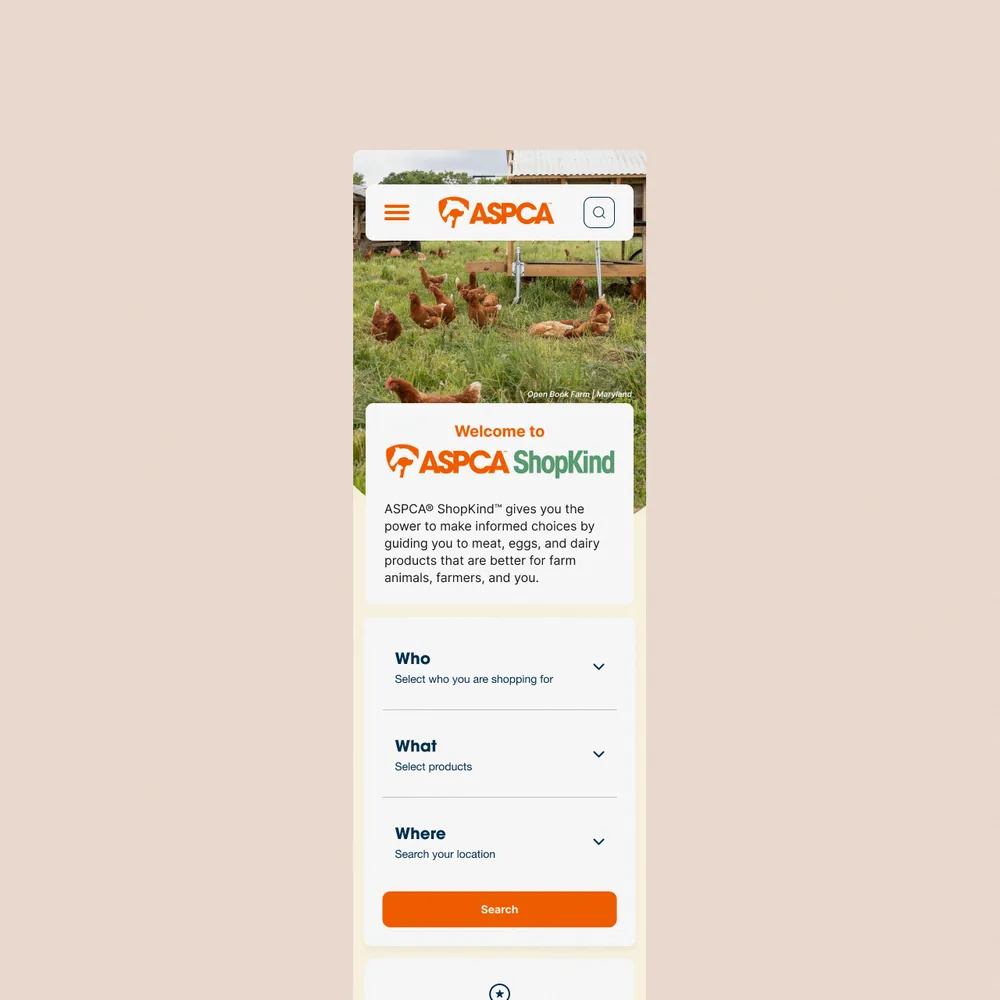
ShopKind replaces the ASPCA’s decade-old Shop With Your Heart Program with something considerably more functional. The new tool uses geolocated data across more than 34,000 locations to point you toward verified higher-welfare products at local stores, farms, farmers’ markets, and even online retailers.
The Challenge
Shop With Your Heart was dated and wasn’t built for people on the go. Bounce rates were high, and most visits lasted under a minute. When the tool doesn’t work, shoppers lose a simple way to make educated, ethical choices, and to push back against factory farming.
An experience audit pointed us to four priorities: a new design system, geolocation that guides people to verified higher-welfare products at stores, farms and online, grocery lists that work without an account, and educational content that’s within reach at every step.
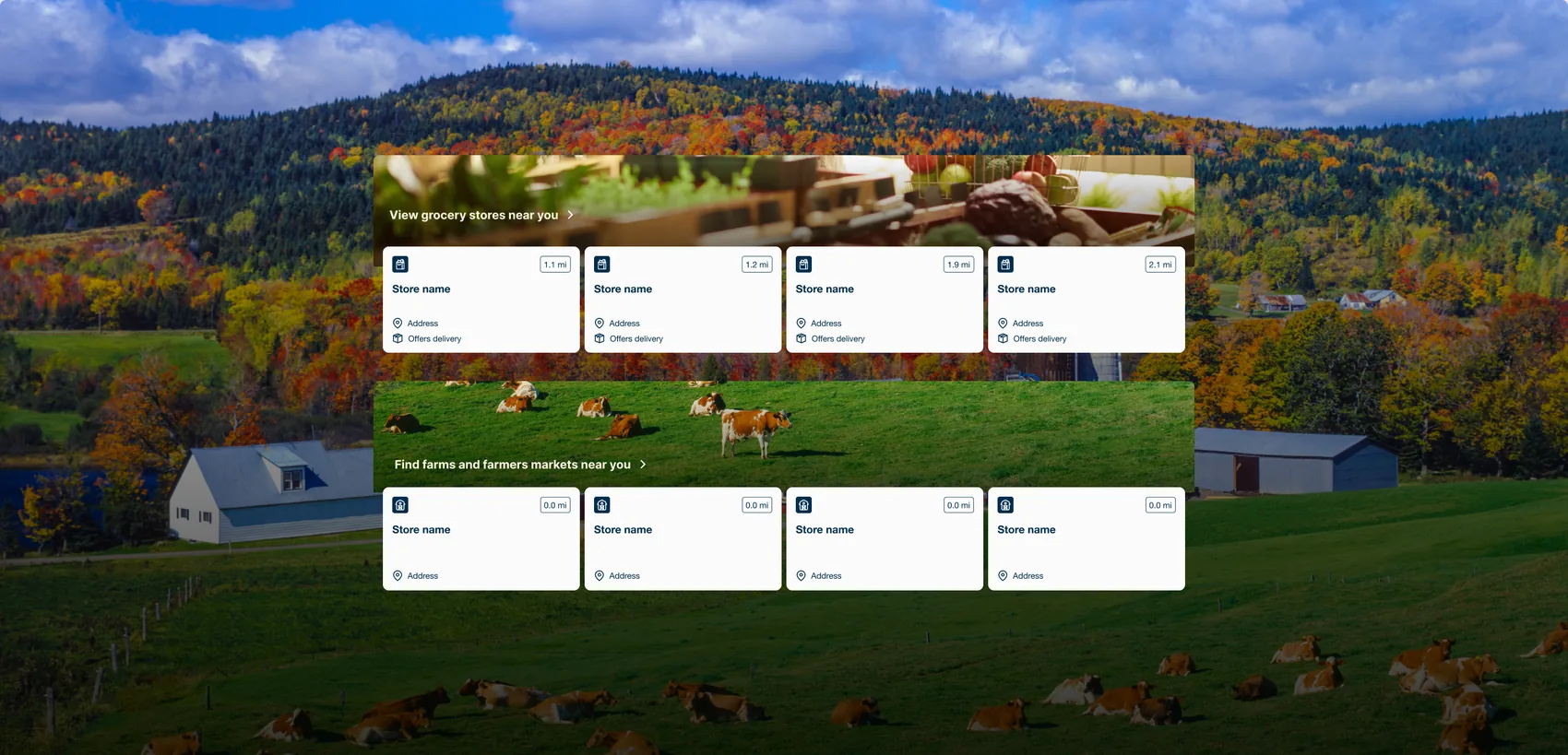
Geolocation
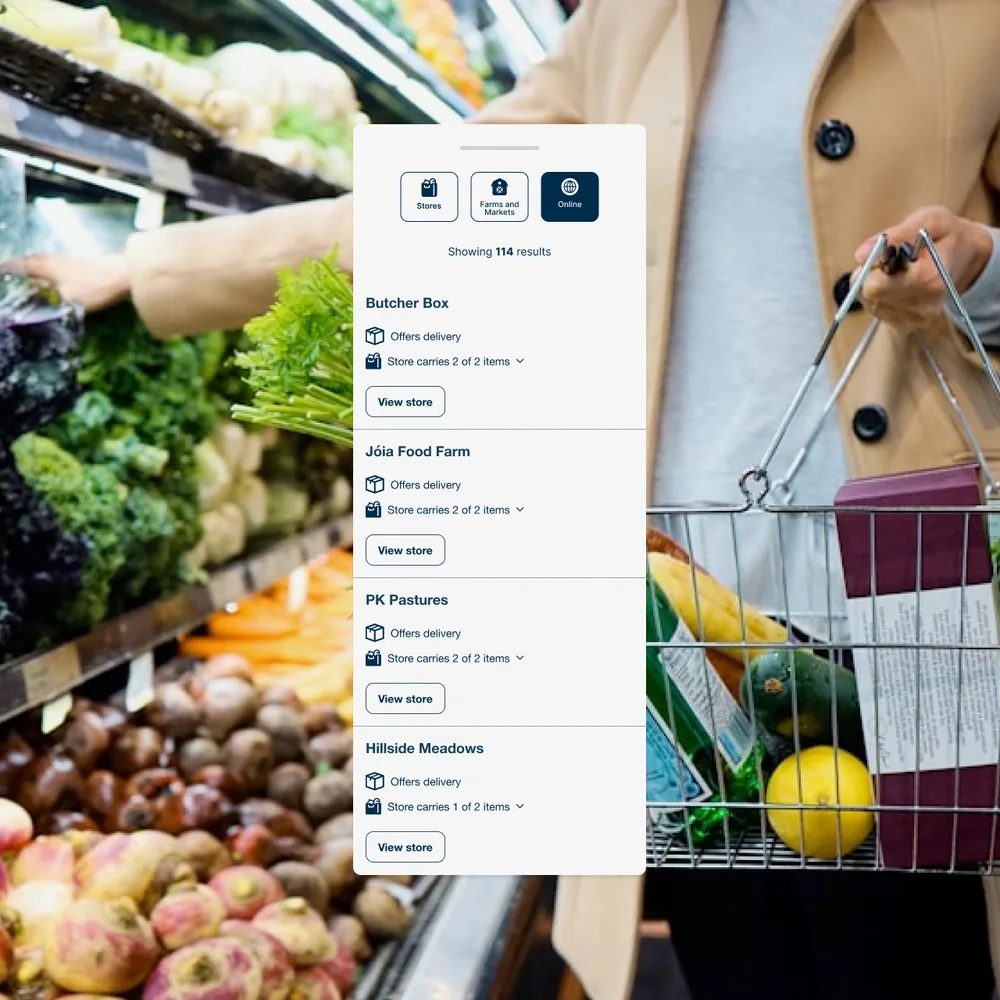
Built on Find Humane, an advocate-built dataset of more than 34,000 locations. Stores and farms & markets are tabs you can combine, told apart by icon rather than color for accessibility. Online-only switches straight to a list.
In certain locations, there may be nothing humane within reach. Recommended online options from the ASPCA help give shoppers an option to choose from, confidently.
This allowed us an opportunity to create alert banners and empty states that speak transparently on the realities of data available from farms and brands.
- Grocery stores
- Farms
- Farmers’ markets
- Online
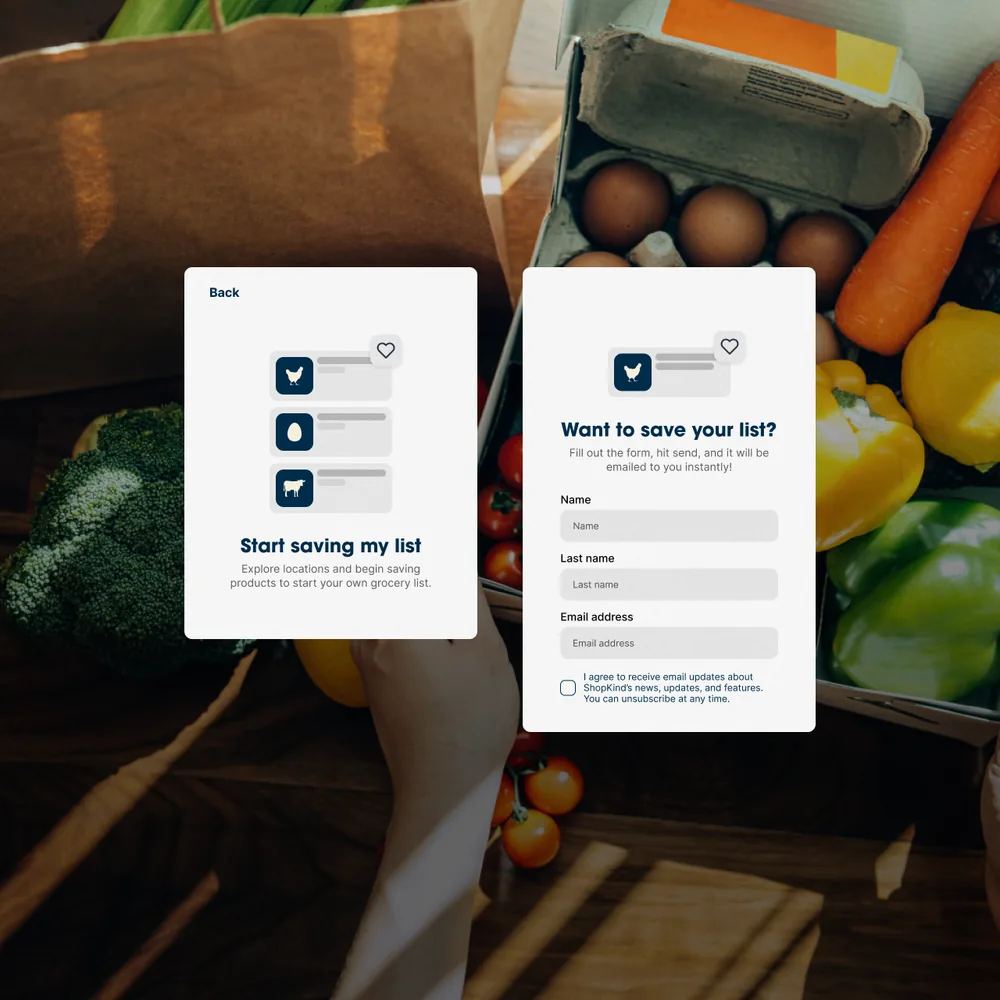
Saving a list
A grocery list rarely stays with one person. Someone plans it, someone else picks it up. Without user accounts, we still wanted that hand-off to work, so lists are stored on the device and sharing is a primary action that allows us to track detailed metrics against.
Outcome
Before launch, I ran usability testing with 10 people across urban, in-store and rural scenarios. Mobile participants completed 87% of tasks, which told me the core flows were landing.
The misses were just as useful. People understood the certifications but couldn’t read the icons, so every label got a readable subtitle, and the ShopKind guide became the one place to learn what each one means. People also asked for prices we didn’t have. Rather than hide that, we answered it plainly in the FAQ, the same honesty that shaped our empty states.
ShopKind launched alongside the ASPCA’s rebrand, with coverage from SheKnows and PR Newswire. And for the first time, the program has a way to measure what people actually save and share.
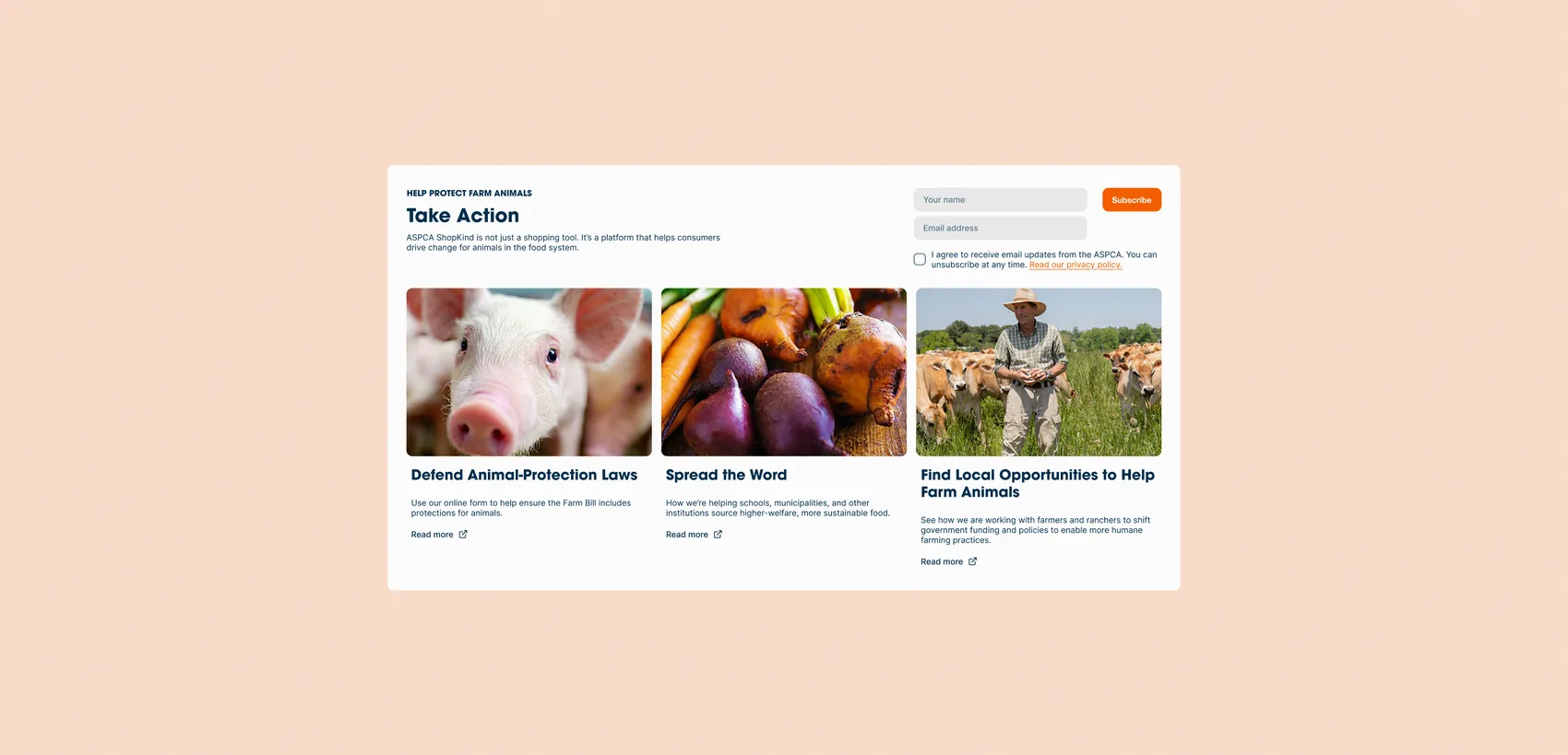
We set out to make the humane choice easier to find. ShopKind does that, and it also helps people understand why it matters, with resources on how animals raised for food are treated and support for the farms doing it right.
- Team
- Alex HelfersAaron CzarneckiHannah Twietmeyer